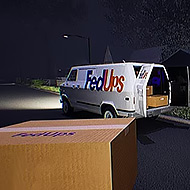
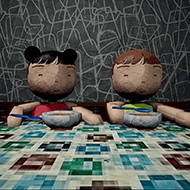
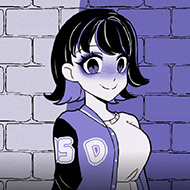
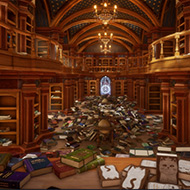
You load the last few packages into the truck, same as every other shift working for Fed-ups, and the person next to you mentions — almost as an aside — that they think someone has been following them. That’s the entire setup Death Delivery needs before the rest of the night stops behaving like a normal delivery route. Death Delivery is a short horror game, running somewhere between 40 minutes and an hour, and nearly all of that time is spent doing the same mundane task: getting packages to doorsteps.
An Ordinary Shift That Doesn’t Stay Ordinary
The premise of Death Delivery stays deliberately small. You’re a delivery driver, the packages are real deliveries, and the doorsteps are ordinary houses. There’s no early exposition dump explaining a curse or a conspiracy — the game trusts the mundane setup to carry weight on its own, and it does, because the horror doesn’t announce itself. It creeps in through details: a rustle in a bush that wasn’t there on the last stop, a flicker at the edge of your vision that could be nothing.
What makes the delivery framing work is repetition. Each stop in Death Delivery follows the same basic rhythm — approach a house, drop a package, move to the truck, drive to the next address — and it’s that repetition that makes deviations from it land so hard. The game is built around the player’s own expectation of routine, then breaks that expectation exactly when the player has started to trust it again.
As the shift goes on, the presence stalking the driver becomes progressively more aggressive, moving from background unease into something that can appear directly and unexpectedly. Early stops are about noticing; later stops are about surviving what you’ve noticed.
The Fed-ups Job Nobody Warned You About
Working for Fed-ups is presented as unremarkable at the start of Death Delivery — it’s a job like any other, with a truck, a route, and a stack of packages to get through before the shift ends. The horror doesn’t come from the job itself but from what starts sharing the same streets and driveways the job requires you to walk through alone, stop after stop, house after house.
The colleague’s warning about being followed is the detail that recontextualizes everything afterward. Once it’s been said out loud, every empty street and every unlit porch in Death Delivery carries a different weight than it would have five minutes earlier.
Atmosphere over action: Death Delivery doesn’t hand the player tools for fighting back — the tension comes entirely from proximity and uncertainty, not combat, which keeps every stop feeling like a decision about whether to keep going rather than a fight to win.
Why Players Keep Coming Back To This One
Death Delivery has drawn a mostly positive response from players, with the majority of reviews on Steam rating the experience favorably. Much of that reaction centers on the pacing — a 40-minute-to-an-hour runtime that never gets a chance to overstay its welcome, paired with a stalker-style threat that escalates rather than repeating the same scare twice.
The delivery-driver premise itself gets singled out often in player discussion, since it swaps a haunted house or abandoned facility for something far more familiar: a job most players can picture themselves doing. That familiarity is part of what makes the escalation feel personal rather than abstract.
What New Players Get Wrong
Players new to Death Delivery often keep moving at the same pace throughout the whole shift, treating every stop identically regardless of how the atmosphere around them has shifted. Since the game telegraphs escalating danger through subtle environmental cues rather than explicit warnings, missing those shifts in tone is one of the more common ways a first run goes sideways.
Does Death Delivery Have Combat?
No — there’s no fighting back built into Death Delivery. Survival is about noticing the stalking presence early and reacting to it, not confronting it directly.
How Long Is a Full Playthrough?
A complete run takes roughly 40 minutes to an hour, making it one of the shorter entries in stalker-style horror.
Reading the Streets Before the Stalker Does
By the time you reach the later stops of your Fed-ups shift, the subtle rustles and flickers from the early game have usually become something the game lets you actually see, if only for a moment. That shift — from suggestion to confirmation — is where most of the tension in Death Delivery concentrates, and it’s also where the routine the game spent its first stretch building finally stops protecting you.
Part of what makes that escalation effective is how little the game changes about its own presentation to signal it. The truck still drives the same way, the packages still need to reach the same kind of doorsteps, and the UI never shifts into an obvious “danger mode.” Players are left to notice the change in the world around the task rather than being told about it, which is part of why the shift from unease to open threat tends to catch people off guard even on a second playthrough.
Because Death Delivery never explains exactly what is stalking the driver beyond the early conversation about being followed, most of what players know about the threat comes from what they personally witness during a run — which stops differ from player to player depending on how quickly they notice the environmental cues the game is dropping.
Finishing the Route
Death Delivery earns its dread the same way its premise earns your trust at the start: through repetition, familiarity, and the slow erosion of both, without ever needing a cutscene to tell you the rules have changed. What begins as a normal night behind the wheel for Fed-ups ends as something closer to a survival exercise, and the game never needs more than an hour to make that shift feel complete. For anyone who finished their shift in Death Delivery still checking empty driveways out of habit, that same instinct for reading a quiet street carries over well into other stalker-driven horror experiences.