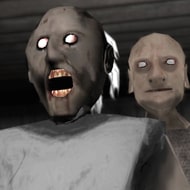
What happens when you sleep through suhoor and the thing that comes looking for you isn’t a person? TungTung’s Nightmare builds its entire premise around that question, taking the “Tungtungtung Sahur” meme — the idea that oversleeping the pre-dawn meal during Ramadan summons a creature to punish you — and turning it into a short, objective-driven horror game with almost no hand-holding.
A Meme Turned Into an Actual Threat
Sahur, also known as suhoor, is the pre-dawn meal eaten before a day of fasting, and missing it is the entire premise TungTung’s Nightmare is built on. In the meme the game draws from, oversleeping and missing that meal means being terrorized by Tungtung, a creature whose whole design plays on being both absurd and unsettling at the same time. The game keeps that duality intact rather than smoothing it into a more conventional monster.
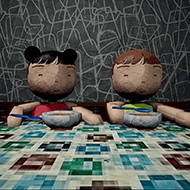
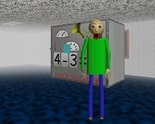
The guidance the game does give is minimal by design: an objective marker reading “0/6” sitting on the dining table, and figuring out how to fill that number is left mostly to the player to work out through trial and error rather than explicit instruction.
Gathering Food Before Tungtung Finds You
The core loop is stated plainly by the game’s own structure: wake up, find food, avoid death. Six items need to be gathered before suhoor is considered complete, and every trip away from a safe spot to find one of them is a trip where Tungtung can appear. The developer describes the underlying system as a chase mechanic — once Tungtung is aware of you, the objective shifts from searching to evading, and a skilled player can clear the whole encounter in a few minutes flat.
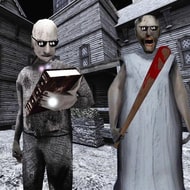
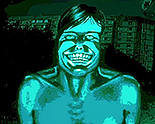
Tungtung himself is built to unsettle through design rather than sheer aggression — a humanoid, sausage-like being with wide eyes and long arms that swing awkwardly at his sides, wearing a permanent, forced grin that doesn’t change whether he’s found you or not. That fixed expression is part of what makes encounters with him land the way they do; there’s no visual cue that escalates before he acts, just the same crooked smile whether he’s far away or right behind you.
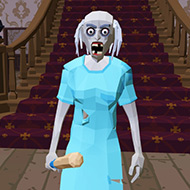
The game’s low-poly art style, built in Unity with assets modeled in Blender, keeps the domestic setting deliberately sparse — there’s no elaborate environment to get lost in, which puts the focus squarely on Tungtung’s approach rather than on navigating a large space. TungTung’s Nightmare also ships with subtitles, an interactive tutorial layer, and support for both English and Indonesian, a detail that matters given how directly it draws on an Indonesian meme for its premise.
Racing Toward Every Item at Once
New players tend to rush toward every visible item on the map at once, assuming speed matters more than caution. Because TungTung’s Nightmare gives no early guidance about how Tungtung notices the player, moving carelessly toward the six required items is one of the most common ways a first attempt ends early.
The Meme Roots Players Keep Bringing Up
Discussion around TungTung’s Nightmare consistently circles back to its meme origin — players familiar with the original “Tungtungtung Sahur” joke tend to treat the game as a fairly faithful translation of that internet horror premise into something actually playable, rather than a loose reskin of an unrelated monster design.
- How many items do I need to collect? Six — the in-game objective marker tracks progress toward that number directly.
- Is there a tutorial? No, the game intentionally starts with no instructions beyond the objective counter.
- What platform is TungTung’s Nightmare built for? It’s built and played on Windows.
Closing Out Suhoor
TungTung’s Nightmare doesn’t try to stretch its premise past what it can support — it’s a short, focused loop built around one meme, one creature, and one number counting up toward six. Getting through a full suhoor run without Tungtung’s crooked grin catching up to you is less about mastering complex systems and more about respecting how little the game is willing to explain up front. For anyone who finished their first run checking every corner of the kitchen out of habit, that same instinct for reading a quiet room carries over well into short-form horror built around a single sustained threat.